
Why Cyclists Get Numb Hands, Sore Necks and Hot Feet: Six Bike Position Problems
Numb fingers on long rides. A neck that aches by the second hour. Hot, burning feet in the last ten kilometres. Most cyclists file these under “just part of riding” and stop noticing them, the way you stop noticing a squeaky door. They are not part of riding. They are almost always a position problem, and position problems are fixable.
What follows are six presentations that turn up constantly in the clinic, each tied back to what is actually causing it on the bike, not just how to treat the symptom afterwards.
1. Numb or tingling hands
Ulnar or median nerve compression at the wrist, from sustained pressure through the heel of the hand. Usually a reach or handlebar height issue: too much weight going through the hands because the position is not supporting it anywhere else, or bars that are too low for the rider’s flexibility on that day.
Padded gloves treat the symptom. They do not fix a bike putting too much load through the hands in the first place. The actual fix is redistributing that load through core and reach adjustment, which is bike fit territory, not glove-shopping territory.
2. Lower back pain
The most common complaint that walks in the door, and the most commonly mistreated, because it is usually blamed on core weakness alone. Core strength matters, but a lot of cycling lower back pain is a hip flexor and pelvis story: a saddle position or reach that locks the pelvis into a rotated position for two or three hours at a time, and a spine compensating for it the whole way.
Strengthening a core that is being asked to hold a bad position for hours will help, but only partially. Fixing the position removes the reason the core has to fight in the first place.
3. Neck and shoulder pain
Chronic cervical extension — the neck held up and back for hours so the eyes can see the road — loads the same few segments of the spine constantly. It is worse the more aggressive the position, and worse again for riders who have added reach or drop without the flexibility or core strength to support it yet.

Manual therapy releases the immediate tightness. It does not stop the position putting the same load straight back on next ride, which is why this one keeps coming back for a lot of riders until the fit itself changes.
4. Patellofemoral and ITB knee pain
Two different problems that get lumped together because they both hurt around the knee. Patellofemoral pain is usually a saddle height or fore-aft issue changing the tracking of the kneecap. ITB pain is more often a cleat alignment or leg-length asymmetry issue, with the band getting irritated as it crosses the knee on every pedal stroke, thousands of times a ride.
Both respond to load management and strengthening in the short term. Neither goes away for good until the mechanical cause on the bike is corrected, because the underlying stress is reapplied every single ride.
5. Saddle and soft-tissue discomfort
Frequently a saddle width or shape mismatch for that rider’s sit bones, sometimes a levelling issue, occasionally a symptom of a position that is putting too much weight rearward through the saddle because the front end is not supporting enough of it. Chamois cream and a different saddle sometimes help. They do not fix a bike distributing weight wrong in the first place.
6. Hot foot and Achilles irritation
Burning forefoot pain on longer rides is commonly a cleat position too far forward, concentrating pressure over the metatarsal heads instead of spreading it across the whole foot. Achilles irritation often tracks back to saddle height — too high, and the ankle is doing extra work at the bottom of every stroke to reach full extension, thousands of times over a long ride.
The pattern across all six
Every one of these has a version of the same story: a symptom that is genuinely physical and genuinely treatable, sitting on top of a mechanical cause that will keep recreating it until the position changes. Physiotherapy treats the tissue. A fit adjustment removes the reason the tissue keeps getting stressed. Riders who only do one of the two tend to be back in six weeks with the same complaint.
This is also why cycling physiotherapy specifically is different from general physiotherapy for a cyclist. Understanding what a bike position is doing to a hip, a wrist or an Achilles tendon over a three-hour ride changes what gets treated and how, and it means the same clinician can look at the bike itself rather than sending a rider elsewhere to get it checked separately.
Not only cyclists, and not only serious injuries
Most of the above shows up in people who ride regularly but do not consider themselves athletes — commuters, weekend riders, people getting back into it after a break. Local riders from Wright, Coombs, Denman Prospect, Weston Creek, Holder and across the Molonglo Valley turn up with exactly these presentations. The fix is rarely dramatic. It is usually a small, specific change that removes load from wherever it has been concentrating.
What a session actually looks like
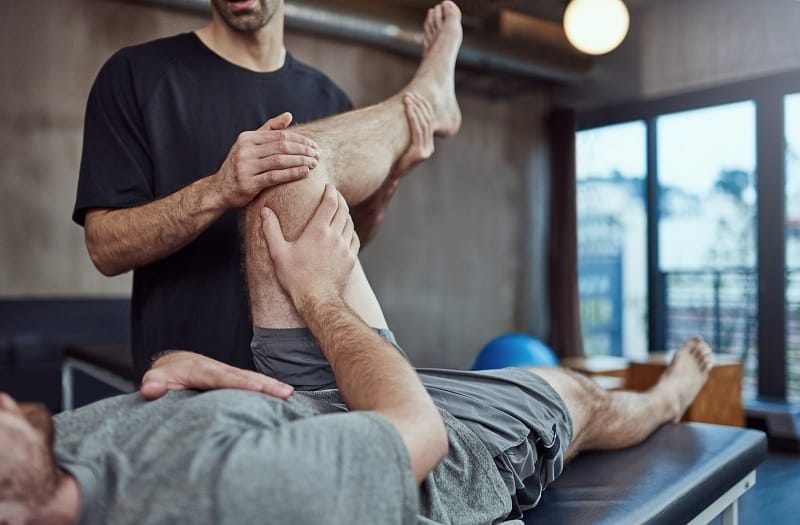
Assessment first, on the table: range of motion, strength, and where the pain actually originates, which is not always where it is felt. Nerve-related hand symptoms, for instance, can trace back to the neck rather than the wrist, and a knee that hurts on the inside is not automatically an ITB problem.
Then a look at the bike itself, because a treatment plan that ignores the machine the person spends ten hours a week on is treating half the problem. Saddle height, fore-aft position, reach and cleat alignment all get checked against what the assessment found, not against a generic fitting chart.
The output is usually two things: hands-on treatment and a specific exercise plan for the tissue itself, and a set of concrete adjustments to the bike so the same load is not reapplied on the next ride. Riders who get both tend to stay fixed. Riders who only get one tend to be back.
When to stop waiting it out
A twinge that settles within a day or two of a hard ride is normal training load. Pain that is present at the start of every ride, that changes how you pedal to avoid it, or that has been quietly getting worse for more than two or three weeks, is not something to keep managing with rest days and hope. Earlier attention is a shorter fix, almost always.
Dealing with one of these? Book an appointment at UpHill Performance.
Want this looked at properly?
Physiotherapy, bike fit, aero testing and metabolic testing in Wright, ACT.