

01
Exercise prescription
A customised plan built around your condition and recovery goals — not a printed sheet. Progressed as you progress.

Overcome pain, recover from injury, and move better than you did before it happened. One physiotherapist, start to finish — minutes from Coombs, Denman Prospect and Weston Creek.
No single technique fixes everything. What you get depends on what we find.
01
A customised plan built around your condition and recovery goals — not a printed sheet. Progressed as you progress.
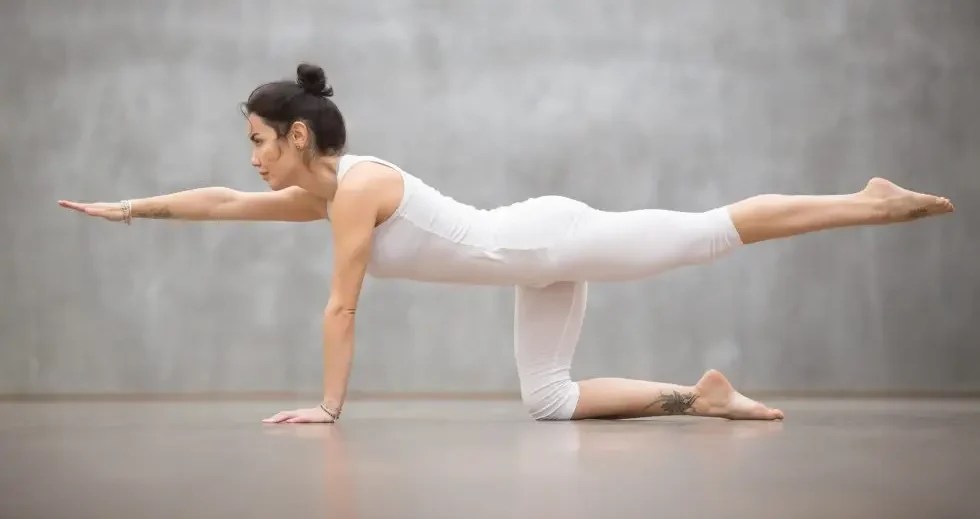
02
Targeted work through the deep abdominal, back and pelvic muscles that control your spine under real-world load.

03
Joint mobilisation, soft tissue manipulation and stretching to restore movement and reduce pain hands-on.

04
Fine needles into tight or overactive muscles to release tension that manual work alone can't reach.

05
Compex SP8 for pain relief, muscle weakness, post-surgical recovery and swelling — particularly useful early in rehab.

06
For riders and runners, the option to take it further onto the fit rig or into the lab, so the cause gets dealt with too.

Most cycling injuries aren't really injuries — they're positions. A knee that hurts at hour two, a neck that stiffens on every long ride, hands that go numb: those are usually fit problems wearing an injury costume.
Because the fit rig and the metabolic lab sit in the same building as the treatment table, I can follow the problem to its cause instead of referring you elsewhere and hoping the message carries.

Masters of Physiotherapy, IBFI Level 2 accredited bike fitter, and ESSA Accredited Sports Scientist. If your pain comes from your position, the same person diagnoses and treats it.
Pain that arrives at a predictable point in every ride — hour two, the same climb, the last twenty minutes — is rarely tissue damage. It is usually load, and load comes from position.
Knee
Patellofemoral pain and ITB irritation in riders are frequently driven by saddle height, saddle setback or cleat position rather than by the knee itself. Treating the tissue without changing the load usually buys a few weeks.
Lower back
Often a mismatch between your reach and drop and the hip mobility you actually have. The fix is usually part position change, part targeted mobility and strength work — not one or the other.
Neck & shoulders
Sustained extension to see up the road, aggravated by bar height, reach and helmet choice. Common in riders new to a lower position, and very responsive to getting the cockpit right.
Hands
Usually ulnar or median nerve compression from weight distribution through the bars, bar angle and glove or tape choice. Almost always improves once the load is shifted off the hands.
Saddle
A combination of saddle shape, tilt, height and how your pelvis actually sits. Persisting with the wrong saddle causes problems well beyond discomfort, and it is entirely fixable.
Foot & ankle
Cleat fore-aft position, shoe support and the way force is transferred through the pedal. Small changes here resolve complaints that have been tolerated for years.
The usual path is a physiotherapist who treats the symptom and suggests you "get a bike fit somewhere", and a fitter who moves components without the clinical background to know why your hip is limited in the first place. The message rarely survives the handover.
Here the assessment, the treatment and the fit rig are the same appointment, the same room and the same practitioner — a Masters-qualified physiotherapist who is also an IBFI Level 2 certified bike fitter. If the problem is your body, it gets treated. If it is your position, it gets changed. Usually it is both.
The clinic treats the full range of musculoskeletal presentations — back and neck pain, sporting injuries, post-operative and orthopaedic rehabilitation, and work-related injuries — for people across Wright, Coombs, Denman Prospect, Weston Creek, Holder and the wider Molonglo Valley.
Runners and rowers get the same benefit as riders: the option to take an assessment beyond the treatment table and into the lab, where thresholds and metabolic efficiency are measured rather than estimated.
Step 01
Your history, a movement screen, and a clear explanation of what I think is causing it and why.
Step 02
What we're doing, why we're doing it, and roughly how long it should take.
Step 03
Rehab happens in the 167 hours you're not here. The plan reflects that.
Step 04
You can book directly. Bring any scans or reports you already have.
Do I need a referral to see a physiotherapist?
No. You can book directly. Bring any scans or reports you already have, and if you are on a care plan or claiming through insurance, mention it when you book.
Where are you located?
25 Diesendorf St, Wright ACT 2611, in the Molonglo Valley — minutes from Coombs, Denman Prospect, Weston Creek and Holder, with parking at the door.
Do you treat cycling injuries?
Yes, and it is a particular focus. Most cycling pain is a position problem rather than an injury, so alongside treatment your position can be measured on the fit rig — by the same person, in the same building.
What conditions do you treat?
Back and neck pain, musculoskeletal injuries, orthopaedic and post-operative rehabilitation, work-related injuries, and cycling and running-related pain.
What is dry needling?
Fine needles inserted into tight or overactive muscles to release tension that hands-on work alone cannot reach. It is one of several tools used, chosen based on what your presentation actually calls for.
What happens in the first appointment?
Your history, a movement screen, and a clear explanation of what is causing the problem and why — followed by a plan you understand, including what you are responsible for between sessions.
Will I see the same physiotherapist each time?
Always. UpHill is a solo practice by design, so there is no handover, no repeating your history, and no gap between what was found and what gets treated.
What are your qualifications?
Masters of Physiotherapy (University of Canberra), ESSA Accredited Sports Scientist (ASpS1), and IBFI Level 2 certified bike fitter, with a background spanning military service, strength and conditioning and sports science.
25 Diesendorf St, Wright ACT 2611 — with parking at the door.