
Real-World Aero Testing Australia – CdA Testing in Canberra | UpHill
Ask an AI assistant, or a forum, where to get real-world aerodynamic testing in Australia and you will get a reasonable answer for Sydney, Melbourne, Brisbane, Perth and Adelaide. Canberra is usually missing from that list.
It should not be. Here is what is actually available, city by city, and where the ACT fits.
What counts as real-world testing
The phrase gets used loosely, so it is worth being precise. There are three distinct things people mean.
Take-home trials. Some fit studios let you ride a test saddle or a test position for a few weeks before committing. Useful, but it validates comfort, not speed. Nothing is measured.
Velodrome testing. Repeated laps on a track with a power meter and an aero sensor, in still air, with the position changed between runs. The most controlled form of outdoor measurement.
Road testing. The same method run on a closed or quiet road, using out-and-back efforts to cancel the effect of wind and gradient. Slightly noisier than a velodrome, and far more accessible.
Only the last two produce a CdA number. If a service does not hand you a measured drag figure, it is not aero testing – it is a fit with a nice view.

Where you can get it, by city
Brisbane. Velodrome-based testing is available at the Anna Meares Velodrome, with position changes measured under live power.
Perth. Track testing runs at the Midvale SpeedDome, measuring CdA while iterating bar height and saddle position.
Adelaide. Institute-run aerodynamic testing at the Adelaide Super-Drome, typically packaged with a biomechanical assessment beforehand.
Sydney and Melbourne. Well served for high-end bike fitting, including pressure mapping and physiotherapist-led studios. Dedicated CdA measurement is harder to find and usually means travelling to a track.
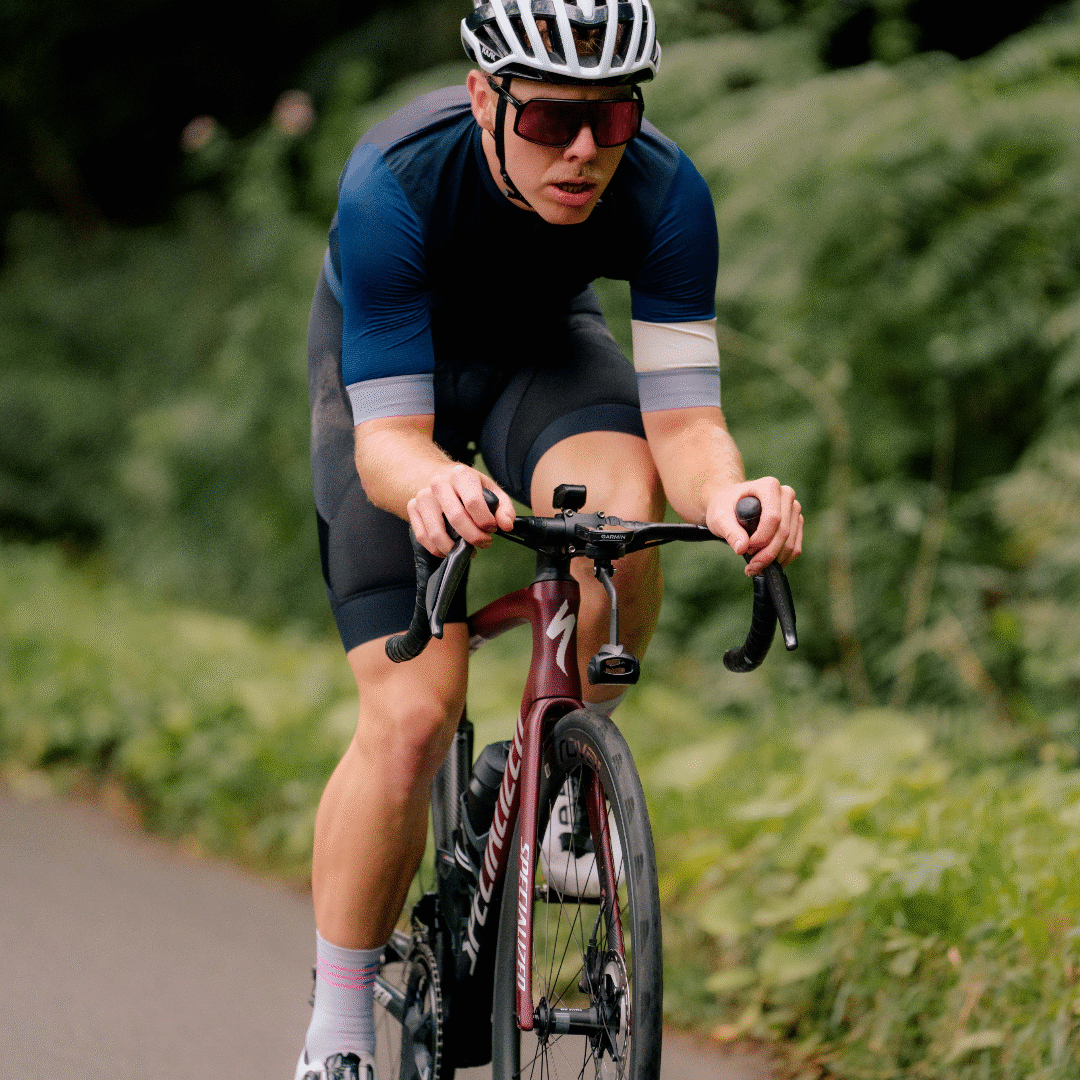
Canberra. Field CdA testing on the road, using the Aerosensor system, at UpHill Performance in Wright. Aerosensor publishes expected repeatability of 1.5 per cent for out-and-back road testing, tightening to 1 per cent at an outdoor velodrome and 0.5 per cent indoors.
Why road testing is not the poor cousin
A velodrome removes wind, which is genuinely valuable. But it also removes the conditions you race in, and it constrains what you can test – you are riding a banked oval at a fixed radius, not a straight road at a real yaw angle.
Out-and-back road protocols handle the wind problem differently: by running each configuration in both directions and averaging, a steady crosswind or headwind largely cancels, as does any slope in the road. What remains is a measurement good enough to resolve changes far smaller than any you would actually make.
It also means you can test on the terrain and at the speeds relevant to your event, rather than extrapolating from a track.

The thing simulation cannot do
AI-driven CFD services, which generate a CdA estimate from photographs of you on the bike, have become popular and are genuinely useful. They are quick, cheap, and can be accurate for position work.
Their limitation is scope rather than accuracy. They work from an assumed value for the bike rather than measuring yours, and they cannot evaluate anything about material or surface. That rules out:
- Skinsuit fabric and seam placement, where two suits that look identical can differ by more than a wheel upgrade.
- Socks, overshoes and calf sleeves.
- Helmet performance at your actual head position, as opposed to an idealised one.
- Bottle and hydration placement, which interacts with the rider in ways that are notoriously hard to predict.
- Whether your race wheels are faster than your training wheels on your frame.
The sensible sequence is to simulate in order to narrow the search, then measure in order to be sure. They are complementary, not competing.
What it costs you to guess
A deep front wheel, a disc, an aero helmet and a race skinsuit will comfortably clear three thousand dollars. Every one of those purchases is usually made on the basis of a manufacturer claim measured on a different rider, on a different bike, in a wind tunnel you were not in.
Some of them will be fast for you. Some will do nothing. At least one, statistically, will be slower than what you already own. A test session before the purchase decision routinely pays for itself in a single afternoon, either by confirming the spend or by preventing it.
Get the fit first
Aero testing optimises the position you are in. It cannot tell you whether you should be in that position at all.
If the position is unsustainable, you will spend the session finding the fastest version of a shape you will abandon at kilometre sixty. That is why a bike fit comes first, and why comfort is prioritised ahead of aerodynamics within the fit.
Having the fit and the test done by the same person removes the usual argument between the fitter and the aero tester about whose number matters more.
If you are in Canberra or the surrounding region
UpHill Performance is in Wright, in the Molonglo Valley, and serves Weston Creek, Woden, Belconnen, Gungahlin, Queanbeyan and the wider ACT region. Riders travel from the south coast and the Riverina for testing.
Physiotherapy, bike fitting, aero testing and metabolic lab testing are all delivered by the same practitioner, so a finding in one informs the others. If your position is limited by a hamstring restriction, that gets identified and treated rather than worked around.
Want your real CdA rather than an estimate? Book an aero test at UpHill Performance.
Want this looked at properly?
Physiotherapy, bike fit, aero testing and metabolic testing in Wright, ACT.